Legal Assistance for Veterans in DC: How to Get Help and Access Local Community Resources
Updated: 14 hours ago
A legal problem can grow quickly when housing, benefits, family, credit, or military records are involved. For veterans in Washington, DC, the good news is that help exists, and much of it is built around the needs of former service members and their families.
The challenge is knowing where to start.
A veteran may need help appealing a VA benefits decision, fighting an eviction, correcting a discharge record, getting public benefits, clearing a warrant, handling child support, or dealing with debt. Some issues belong in federal agencies. Some go through DC courts. Others can be solved through a community legal clinic before they turn into a crisis.
This guide explains how veterans in DC can find legal help, what kinds of issues local organizations often handle, and how to prepare before calling or visiting a resource.
This article is for general information only. It is not legal advice, and reading it does not create an attorney-client relationship.
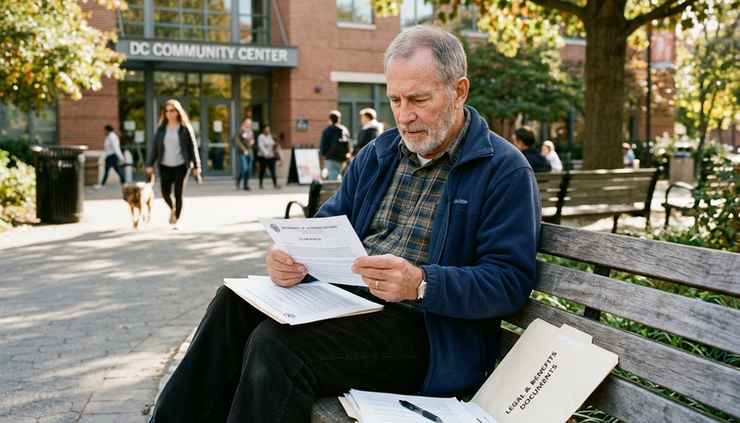
Veterans in DC often face legal issues that overlap
Legal problems rarely arrive one at a time. A delayed benefit can lead to missed rent. A discharge status can block access to education or health care. A criminal record can affect housing and employment. A family court order can collide with disability income.
That is why legal assistance for veterans in DC often works best when it looks at the full picture, not just one form or one hearing date.
Common legal needs include:
VA benefits and appeals Disability compensation, pension, health care enrollment, survivor benefits, education benefits, and appeals after a denial or low rating.
Discharge upgrades and military records Requests to correct service records, upgrade discharge status, or address errors that affect benefits.
Housing and eviction defense Rent disputes, eviction notices, unsafe housing conditions, subsidy problems, and homelessness prevention.
Public benefits SNAP, Medicaid, Temporary Assistance for Needy Families, Social Security, Supplemental Security Income, unemployment benefits, and local assistance programs.
Family law Custody, visitation, child support, divorce, domestic violence protection orders, and guardianship.
Consumer and debt issues Debt collection lawsuits, credit reporting errors, repossessions, predatory lending, and wage garnishment.
Criminal records and reentry Record sealing, warrants, fines, driver’s license issues, and barriers after incarceration.
Employment and discrimination Problems involving veteran status, disability accommodations, unpaid wages, or job protections related to service.
Some organizations focus only on certain issues. For example, a VA-accredited representative may help with a disability claim but not an eviction. A housing legal clinic may help in DC Superior Court but not with a discharge upgrade. Knowing the type of problem makes it easier to reach the right door first.
Start with the issue, deadline, and type of help needed
Before contacting a legal provider, sort the problem into three parts: what the issue is, whether there is a deadline, and what kind of help is needed.
Check for urgent deadlines first
Some legal notices require fast action. If there is a court date, eviction notice, benefits appeal deadline, wage garnishment notice, or deadline from a government agency, treat it as urgent.
Write down:
The date the notice was received
The deadline listed on the notice
Any hearing date or appointment date
The name of the court, agency, landlord, creditor, or opposing party
The case number, claim number, or docket number
If a veteran misses a deadline, help may still be possible, but options can become harder. A legal aid provider will usually ask about dates early in the conversation.
Decide whether the problem is civil, criminal, or benefits-related
Legal resources often separate cases by category.
A civil legal issue usually involves housing, family, debt, public benefits, employment, or consumer problems. These cases may involve DC Superior Court, a DC agency, a landlord, a lender, or another private party.
A criminal legal issue may involve charges, probation, warrants, citations, record sealing, or reentry barriers. Some free civil legal aid groups do not handle active criminal defense, but they may refer veterans to the right public defense or reentry resource.
A veterans benefits issue usually involves the Department of Veterans Affairs, a VA regional office, the Board of Veterans’ Appeals, or the U.S. Court of Appeals for Veterans Claims.
A military records issue may involve a discharge review board or a board for correction of military records.
Gather documents before calling
A first call goes better when key papers are nearby. Veterans do not need a perfect file before asking for help, but a few documents can speed things up.
Helpful documents may include:
DD Form 214 or other separation papers
VA decision letters
Medical records related to the claim or dispute
Lease, rent ledger, eviction notice, or housing subsidy paperwork
Court papers, hearing notices, or protection orders
Public benefits letters
Debt collection letters or lawsuits
Pay stubs, bank statements, or proof of income
Identification and proof of DC residence, if available
For VA benefits cases, keep every VA letter. The date on the letter may control appeal rights.
Local and national resources that can help veterans in DC
DC has a mix of government offices, legal aid groups, veteran service organizations, law school clinics, and national veteran-focused programs. The best starting point depends on the issue.
DC Mayor’s Office of Veterans Affairs
The DC Mayor’s Office of Veterans Affairs, often called MOVA, is a local government resource for veterans, service members, and families. It can help connect residents to benefits information, local programs, and community organizations.
MOVA is not a substitute for a lawyer in court, but it can be a useful referral point when someone is unsure where to begin. It may also help veterans find services related to housing, employment, health, education, and public support.
Veterans can look up MOVA through the DC government website or call 311 to ask for current information.
DC Bar Pro Bono Center
The DC Bar Pro Bono Center is a major access point for free legal help in the District. It supports clinics and legal information services for people facing civil legal problems. Depending on the issue and eligibility, it may help with housing, family, consumer, public benefits, or small business matters.
For veterans who are not sure whether they need a lawyer, a legal clinic can be a practical first step. A brief advice session may clarify the next action, explain court papers, or point the veteran to a full-service legal provider.
Legal Aid DC and other civil legal services
Legal Aid DC provides free civil legal services to eligible DC residents. Matters may include housing, family law, domestic violence, public benefits, consumer law, and related civil needs.
Other community-based legal organizations in DC may also help, including groups that focus on low-income residents, people facing homelessness, immigrants, survivors of violence, or people dealing with poverty-related legal issues.
Examples of DC legal and community organizations that veterans may encounter include:
Legal Aid DC
Neighborhood Legal Services Program
Bread for the City
Washington Legal Clinic for the Homeless
Tzedek DC, for certain debt and consumer issues
Rising for Justice, for selected civil legal matters and court-based help
Programs change over time, and each organization has its own intake rules. Some help only with certain case types. Some require DC residency or income screening. Some offer advice but not full representation.

Veteran service organizations
Veteran service organizations, often called VSOs, can help with VA benefits claims. Many have trained representatives who understand VA forms, evidence, ratings, and appeals.
Well-known VSOs include:
Disabled American Veterans
The American Legion
Veterans of Foreign Wars
Vietnam Veterans of America
AMVETS
Paralyzed Veterans of America
A VSO representative may help file a claim, review a VA decision, gather evidence, and prepare appeal paperwork. Veterans should confirm that the representative is accredited for VA matters.
VSOs usually do not handle every legal issue. A VSO may help with disability compensation but refer a housing or family court matter to legal aid.
The Veterans Consortium Pro Bono Program
The Veterans Consortium Pro Bono Program is a national nonprofit known for helping eligible veterans and survivors with appeals at the U.S. Court of Appeals for Veterans Claims. This can matter when a VA benefits appeal has moved beyond the Board of Veterans’ Appeals.
Because the court has strict rules and deadlines, veterans who receive a Board decision should seek help quickly if they believe the decision is wrong.
National Veterans Legal Services Program
The National Veterans Legal Services Program, based in the DC area, works on veterans law issues and has long focused on benefits, records, and systemic legal problems affecting veterans. Its resources may be useful for understanding VA benefits and discharge-related issues.
Not every organization can take every individual case, but veteran-focused groups can often explain where a case belongs.
Law school clinics in DC
DC law schools often operate clinics that help residents with legal problems under attorney supervision. Clinics may focus on veterans law, housing, family, criminal defense, reentry, public benefits, or civil rights.
Possible clinic sources include law schools such as Georgetown, George Washington University, American University, Catholic University, Howard University, and the University of the District of Columbia. Clinic offerings change by semester, so veterans should check the current clinic pages before applying for help.
Law school clinics may be especially helpful for cases that need careful research, records review, or administrative advocacy.
Where to go for specific legal problems
The right resource depends on the problem. A veteran facing eviction needs different help from a veteran appealing a VA rating decision.
Legal issue | Good first places to ask |
VA disability claim or appeal | Accredited VSO, VA-accredited attorney or agent, veterans law clinic, Veterans Consortium for court appeals |
Discharge upgrade or military record correction | Veterans law clinic, veteran-focused legal nonprofit, accredited attorney familiar with military records |
Eviction or unsafe housing | DC Bar Pro Bono Center, Legal Aid DC, housing legal services, court-based legal help |
Homelessness or shelter access | Washington Legal Clinic for the Homeless, DC homelessness services, MOVA referral support |
Public benefits denial | Legal Aid DC, Bread for the City, Neighborhood Legal Services Program |
Debt collection lawsuit | Tzedek DC, Legal Aid DC, DC Bar Pro Bono Center |
Family law or protection order | Legal Aid DC, DC Bar Pro Bono Center, domestic violence legal services |
Criminal charge or warrant | DC public defense resources, court information center, reentry legal services |
Record sealing or reentry issue | Reentry legal program, law school clinic, civil legal aid provider |
If the first organization cannot help, ask for a referral. A clear referral is often the fastest path to the right provider.
How to ask for help and make the most of intake
Most free legal service providers use an intake process. Intake helps them decide whether the person qualifies, whether the issue fits their services, and whether there is a conflict of interest.
A good intake call is direct and organized.
Begin with the most urgent facts:
“I am a DC veteran facing an eviction hearing next week.”
“I received a VA decision letter denying my claim, and the letter is dated last month.”
“I need help upgrading my discharge because it is blocking benefits.”
“I was served with a debt collection lawsuit in DC Superior Court.”
Then give the basic background. Keep it short at first. The intake worker or attorney will ask follow-up questions.
Be ready to share:
Current address or DC residency status
Household income, if the program screens for eligibility
Veteran status and type of discharge, if relevant
Court or agency deadlines
Whether another lawyer is already involved
Whether the opposing party has contacted the organization before
If a provider cannot take the case, ask these questions:
“Do you know another organization that handles this issue?”
“Is there a clinic I should attend?”
“Is there a deadline I should watch?”
“Are there forms or documents I should gather?”
“Can I call back if the situation changes?”
Take notes during every call. Write down the date, person spoken to, organization, and next step.
Free help, low-cost help, and paid legal representation
Not every veteran will qualify for free legal aid. Eligibility often depends on income, residence, case type, available staff, and funding rules. Even when someone qualifies, a program may not have capacity.
That does not mean the search ends.
Other options may include:
Limited advice clinics
Reduced-fee lawyer referral programs
Pro bono programs
Law school clinics
VA-accredited agents or attorneys for benefits cases
Self-help centers at court
Mediation services
Community case management with legal referrals
For VA benefits claims, veterans should understand fee rules before signing an agreement. Some representatives charge fees only after certain stages of an appeal. Some VSOs provide help at no cost. A representative’s accreditation status matters in VA cases.
For civil court cases, limited-scope representation may be possible. That means a lawyer helps with a specific part of the case, such as advice, document review, negotiation, or one hearing, instead of handling the full case.
Community support can strengthen a legal case
A lawyer can handle legal arguments, but community support can help stabilize the situation around the case.
For example, a veteran fighting eviction may also need rental assistance, case management, medical care, or help replacing identification. A veteran appealing a disability claim may need treatment records, buddy statements, or transportation to appointments. A veteran leaving incarceration may need housing support, benefits screening, and help with fines or licenses.
Useful nonlegal supports in DC may include:
VA medical and mental health services
Community health clinics
Housing counseling and homelessness prevention programs
Food assistance programs
Workforce and education programs
Peer support groups
Faith-based and neighborhood organizations
Case management through veteran-serving nonprofits
Legal problems often become easier to manage when the surrounding emergency is under control. If a legal organization cannot provide social services, it may know local partners that can.
A practical checklist before taking the next step
When a veteran in DC needs legal help, the first move does not have to be perfect. It just has to happen soon enough to protect options.
Use this checklist:
Identify the problem in one sentence.
Find every deadline and hearing date.
Put notices, letters, and forms in one folder.
Gather military records, especially your DD Form 214.
Contact the most relevant legal or veteran resource.
Ask for referrals if the first place cannot help.
Keep notes from every call and appointment.
Do not ignore court papers or agency letters.
Follow up when asked for documents.
10. Get fee agreements or representation terms in writing.
The strongest starting point is often a simple sentence: “I am a veteran in DC, I have this legal problem, and there is a deadline.”
From there, the right organization can help sort the next step. DC has legal aid groups, veteran-focused programs, public offices, clinics, and community organizations that deal with these problems every day. Reaching out early gives those resources the best chance to help.


